At Northern Nevada Coin, one question we hear more often, especially during periods of rising precious-metal prices, is whether collectible coins move in lockstep with silver. The short answer is: not always, and that can be a good thing.
Consider a familiar example from today’s market.
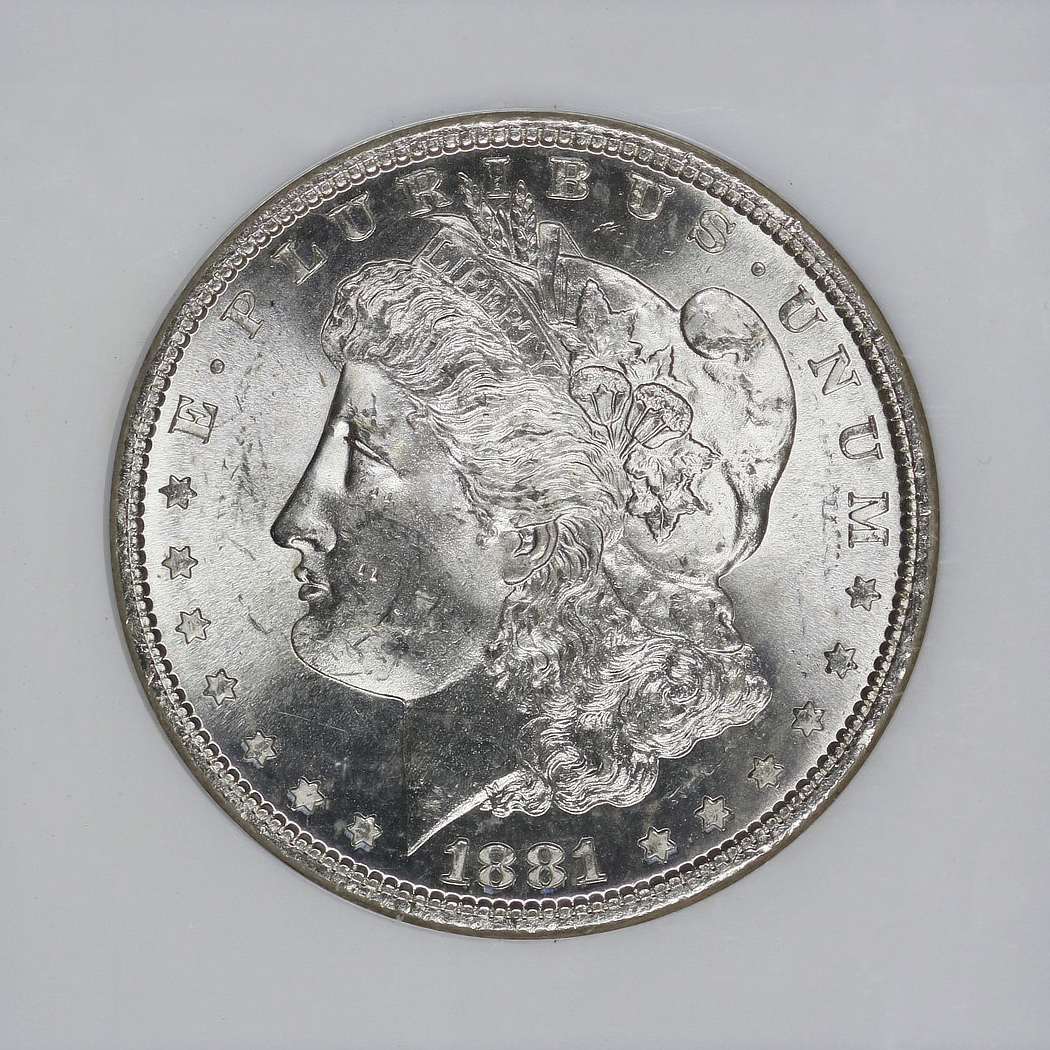
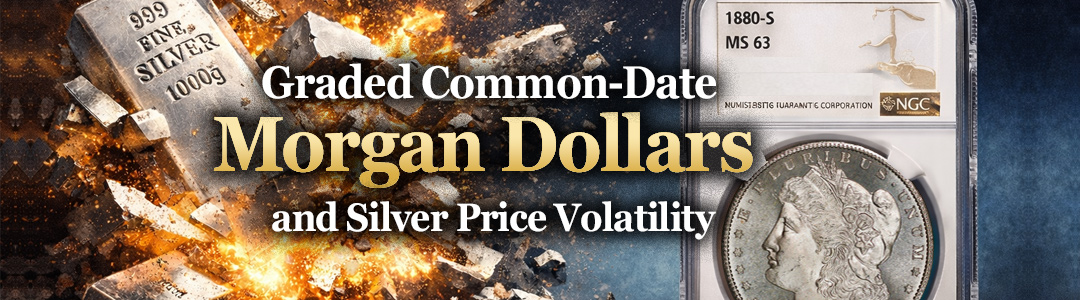
A common-date 1881-S Morgan Dollar graded MS-63 is currently retailing for around $100.00. When silver was trading near $40.00 per ounce, that same coin typically sold for about $80.00. The spot price of silver has essentially doubled, yet the graded coin’s market price has increased by only about 20%.
This isn’t an anomaly—it’s a reflection of how graded collectible coins behave differently than raw bullion.
The Stabilizing Effect of Grading
Graded coins introduce factors that go beyond metal content alone:
-
Condition certainty: A third-party grade locks in quality and removes some of the guesswork. (Make sure you buy the coin, not the grade.)
-
Established collector demand: Common-date Morgans in popular grades like MS-63 have deep, consistent markets.
-
Finite supply at each grade level: Unlike bullion, you can’t “mint” more MS-63 examples.
-
Historical price structures: Collector coins often move within defined trading ranges over time.
Because of this, graded coins tend to absorb swings in silver prices rather than mirror them. When spot prices spike sharply, bullion reacts immediately. Graded coins, by contrast, often adjust more gradually or sometimes not at all.
Reduced Volatility as a Strategy
For collectors and investors alike, this relative stability can be appealing. While bullion excels at tracking metal prices, graded coins may help smooth out volatility, particularly during periods of rapid market movement.
That doesn’t mean graded coins are immune to change—but their pricing is driven by a broader set of fundamentals than silver alone. Many collectors view them as a hybrid asset: tangible precious metal combined with numismatic demand, history, and conditional rarity.
A Thoughtful Approach to Tangible Assets
Morgan Dollars remain one of the most widely collected and recognized U.S. coins, and common-date, mid-Mint-State examples continue to play a meaningful role in balanced collections.
As markets evolve and metals fluctuate, understanding why certain coins move differently can help collectors make better informed long-term decisions.